Table of Contents
The verifiers of blockchain transactions are generally scoped down to two main groups of the consensus algorithm. This “verifiers” position are commonly known as validator and miner, they have the same legitimacy to help blockchains validate information, synchronize data, and process transactions. Though, both have similar task to accomplish but it’s the procedure that make the difference.
Distinguish between Validators vs. Miners
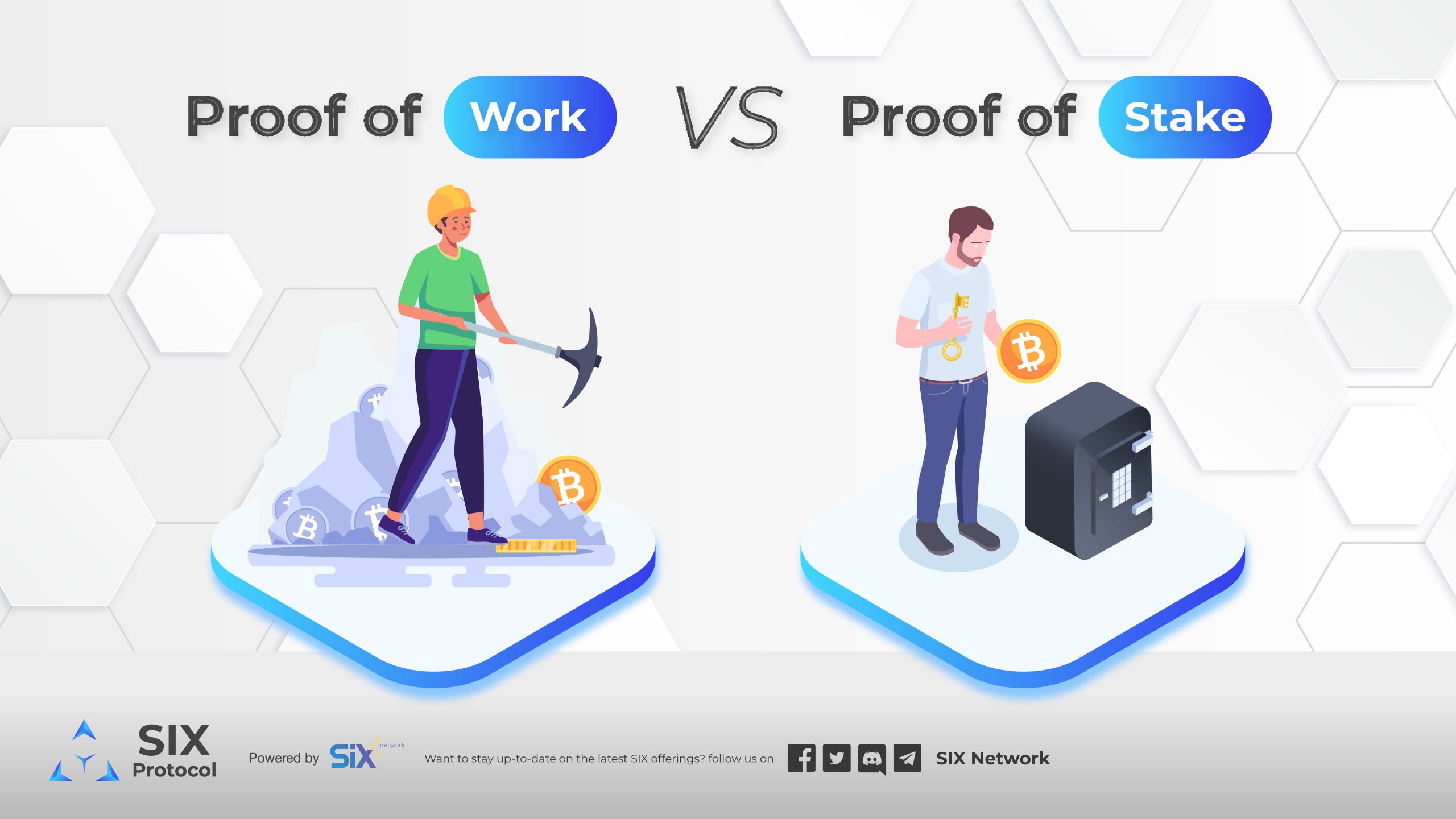
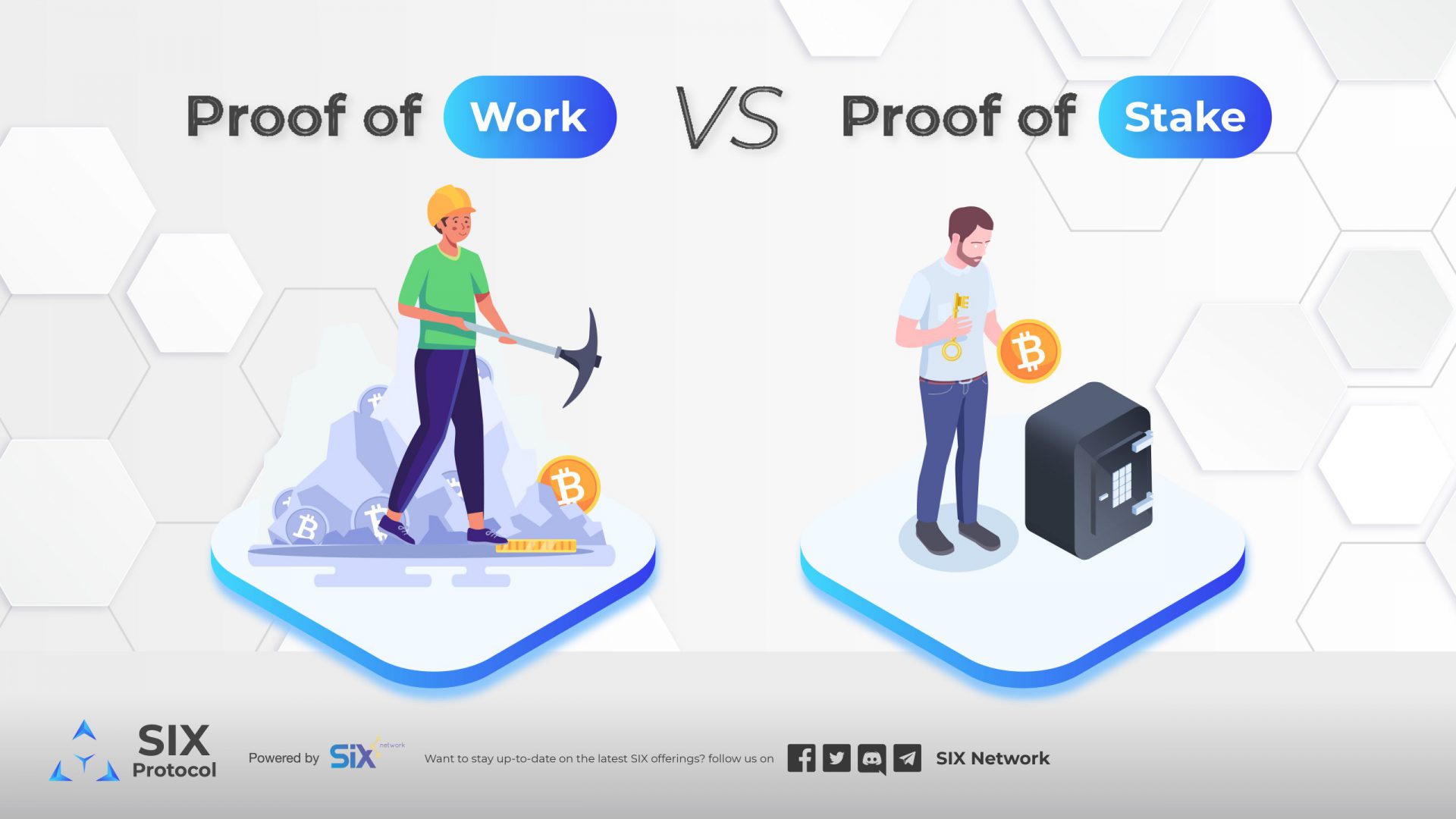
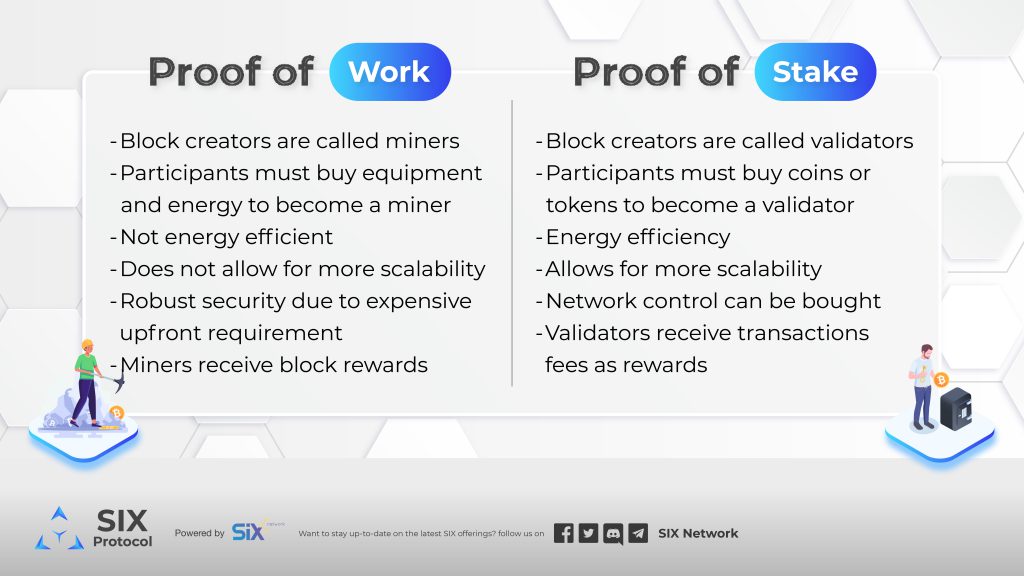
The validators are amended to Proof-of-Stake (PoS) which validators are the ones building the block of the chain enabling tasks for checking transactions, verifying activity, voting on outcomes, and maintaining records.
To become a validator is to “buy into” the position means that token owners will have to offer their tokens as collateral for the chance to validate blocks. Token owners who staked their coins will become validators and receive transaction fees as rewards.
Miners are found in Proof-of-Work (PoW) blockchain network, their task is to solve complex mathematical equations to complete the requirement of becoming nodes for a chain.
Miners usually need to invest in highly advanced equipment, powerful computer RIG, and energy power to run the work. As the name suggests, as proof of work, miners rely on the amount of work they input to receive block rewards.
Behind The Scene of Verification Mechanism
Proof-of-work and mining need to solve a mathematical puzzle known as the proof-of-work problem to create a new group of trustless transactions or blocks on a distributed ledger called the blockchain.
Transactions are bundled into a block, miners jump in to verify the block legitimacy then rewards will be given to the first miner who solves each block problem; this process is called inverse hashing.
Proof of stake and validators is the consensus mechanism introduced by Peercoin and then secondly by the Ethereum chain. It is virtually portrayed by locking up the ecosystem token in the chain which is known as staking.
The overall purpose stays the same on both blocks proving the only difference is in the procedure that the validators to creating the next block are based on how much they have staked and then rewarded with proportion to the staking amount.
Conclusion
In conclusion PoW or PoS is crucial to a blockchain ecosystem to help in the validation of blocks and synchronizing data to create a whole new chain, stabilizing the security within the network through the work performed by miners and validators.
In recent days many blockchain networks are turning to Proof-of-Stake as their consensus process which allows validators to stake tokens in the system and strengthen the security of the blockchain.
SIX Protocol will soon launch and is thrilled to invite everyone to become our validators of the network the procedure is based on Proof-of-Stake Authority (PoSA).
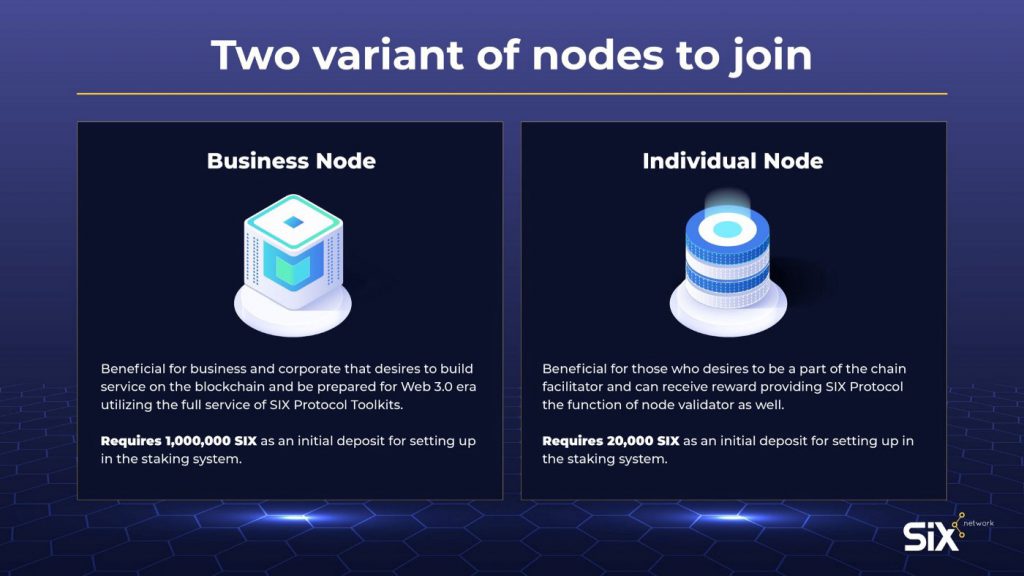
The Individual Node Validator is specified for people who are looking for the opportunity to become a part of consensus verifiers of a network. We are looking forward to you staying tuned for the big announcement and learning more about how to join Individual Node Validator by following this link.
Related Posts

SIX Network ประกาศความร่วมมือกับ Selanet ผู้โครงสร้างพื้นฐานสำหรับ AI Agents
SIX Network ประกาศความร่วมมือกับ Selanet ผู้พัฒนา Infrastructure สำหรับ AI Agents เพื่อขับเคลื่อน Web3 Ecosystem เรามีความยินดีอย่างยิ่งที่ได้ประกาศความร่วมมือกับ Selanet ผู้พัฒนาโครงสร้างพื้นฐานดิจิทัลที่ช่วยให้ AI agents สามารถทำงานบนเว็บไซต์ต่าง ๆ

SIX Network Announces Partnership with Selanet AI Infrastructure
SIX Network Partners with Selanet, AI Agent Infrastructure Developer, to Drive Web3 Ecosystem Growth We are pleased to announce

SIX Network Roadmap 2026: Institutional Assets and Financial Infrastructure
Recap 2025: From Infrastructure to Real World Execution In 2025, SIX Network moved beyond building blockchain infrastructure and began
Series Blog 4: Operationalizing Regulatory Architecture
Understanding regulatory principles is only the first step. The more difficult challenge lies in operationalizing those principles within live systems.
Series Blog 3: Designing Blockchain for Regulatory Alignment
Enter to Blog 3: How Blockchain Architecture Can Be Built for Compliance and Regulatory Compliance concerns often surface early
Series Blog 2: Architectural Integration Patterns with SIX Network
Enter to Blog 2: Architectural Integration Patterns with SIX Network In the previous article, we discussed how standards alignment,

Khanathat Chowpradith
Fulltime learner | Passionate Writer | Investment Geek